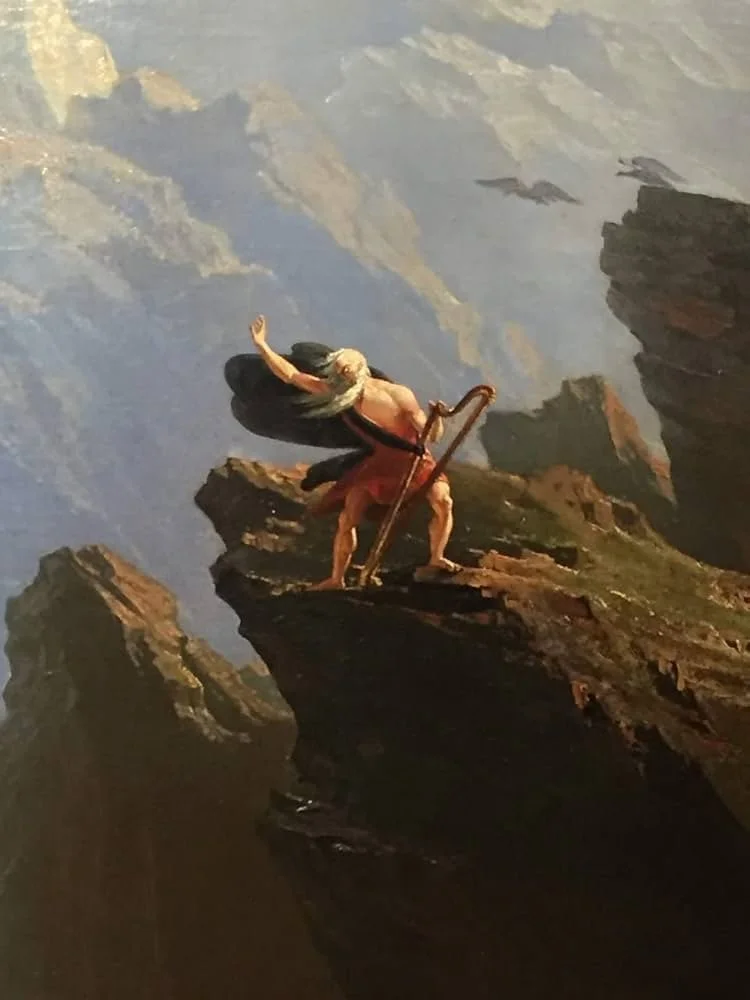
And as long as he lived, she was his only wife
I love this story; I have known it for decades. The first porter’s scene has remained in my imagination since I first read it. But I wouldn’t like to live in the world it portrays.
I became very pro-giant and sympathetic to boars and witches. I doubt this was the storyteller’s intention, although he obviously admired a good horse and dog, and knew the boar was a worthy opponent.
The material was archaic when it was written down. Arthur’s world has nothing of the chivalric values of the Romances. Throughout the story there is an indifference to suffering, stripped of all pretence of ideological or theological justification. In a world of talking animals and men who have been punished by being turned into animals, the distinction between humans and other animals is slight. Twrch Trwyth, the great boar, and his piglets are as brave and as admirable as the heroes who hunt them. Men kill without remorse or compassion. They throw their lives away with flamboyant indifference. To get two strangers into bed, the death toll is enormous, and nobody questions this, at any point in the story.
Those outside courtly society; giants and witches, or those in possession of desired objects, are there to be used, exploited, and killed. The powerful will take what they want or need. They might ask first, but ‘no’ is never a safe option.
It's a story, nothing more or less. I realise that statement rejects modern reading practices that want to object to the perceived ‘ideology’ of any text.
Perhaps, if he’d been asked, the storyteller might have said that stripped of pretence, this is the way the world works. He doesn’t condone or condemn. He reports. Ysbaddaden, shaved and about to die, speaks the truth. Culhwch has earned nothing; learnt nothing. Without Arthur, he didn’t have a chance.
‘And that’ says our author, ‘is how Culhwch won Olwen.’
Quisque iaculis facilisis lacinia. Mauris euismod pellentesque tellus sit amet mollis.